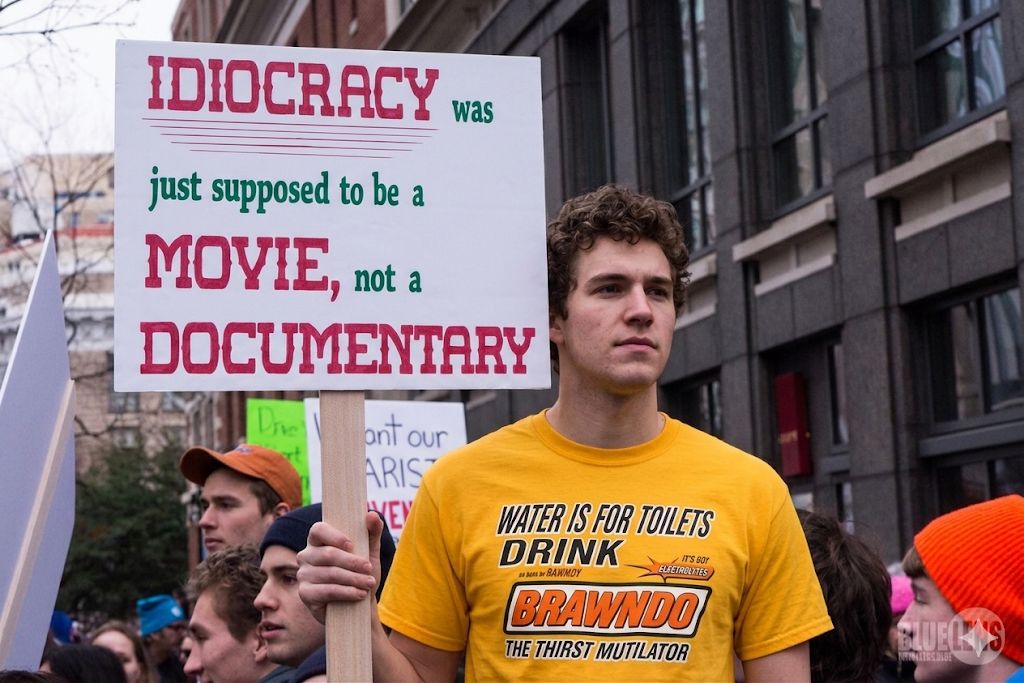
In 2006, Mike Judge made a documentary. He just didn't know it yet.
Idiocracy imagined a future where humanity didn't get destroyed by war or disease. It got dumb. Slowly. Comfortably. One convenience at a time.
I keep thinking about that movie as I watch how we're using AI.
In the age of AI, excellent is the new average.
In the movie, an ordinary man woke up 500 years later as the smartest person alive. He hadn't gotten smarter. Everyone else had just forgotten what smart looked like.
That's not a bug. It might be the whole point.
Everyone is focused on which jobs AI will take. But the quieter threat is something I'd call General Decay. A slow erosion across four dimensions most people aren't tracking:
-
Intellectual
When AI formulates our thoughts and drafts our prose, our thinking muscles weaken. We lose the native ability to reason from first principles, construct complex arguments, make nuanced comparisons. We don't notice it happening because the output still looks smart.
-
Decision-Making
The will to choose is a muscle. Without the constant friction of real decisions, it gets weaker. When we stop choosing for ourselves, we quietly lose the self-reliance required to be an independent agent in our own lives.
-
Emotional and Social
Human connection is inherently high-friction. It involves the risk of embarrassment, the sting of rejection, the anxiety of a real "no." AI companionship removes all of that friction. So our social skills weaken. We become emotionally brittle precisely because we stopped practicing.
-
The Inner Self
There is something quietly devastating about working alongside a machine that is infinitely more capable than you at almost everything. Over time, your sense of contribution and self-worth can simply evaporate.
Full disclosure: I didn't write this with AI. But I thought about it. That's the point.
Brawndo had electrolytes. ChatGPT has answers. We laughed then. Not so sure now.